Eye Health Glossary
Eye Anatomy
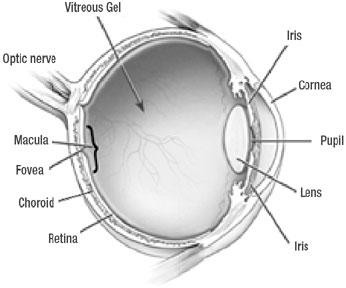
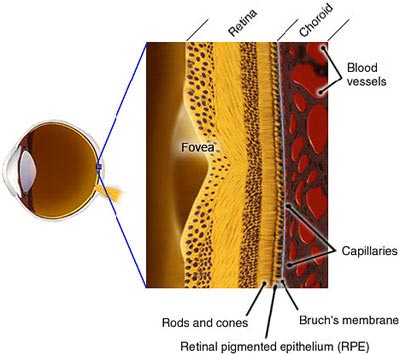
- Retina: Light-sensitive layer in the eye that converts images from the eye's optical system into electrical impulses that are sent along the optic nerve to the brain.
- Macula: Small central area of the retina responsible for fine, detailed central vision.
- Fovea: Central pit in the macula that produces sharp vision.
- Choroid: Bed of tiny blood vessels that lies underneath the retina.
- Lens: Tissue in the eye that helps bring rays of light to a focus on the retina.
- Iris: Pigmented tissue behind the cornea that gives color to the eye and controls the amount of light entering the eye by varying the size of the pupillary opening.
- Pupil: Circular opening in the center of the iris that regulates the amount of light that enters the eye.
- Cornea: Transparent front part of the eye that covers the iris, pupil, and anterior chamber and provides most of the eye's optical power.
- Optic Nerve: Largest sensory nerve of the eye; carries impulses for sight from the retina to the brain.
- Vitreous Gel: Transparent, colorless gelatinous mass that fills the rear two-thirds of the eye between the lens and retina.
Common Diseases of the Eye
- Age-related Macular Degeneration: A major cause of gradual or sudden, painless, central vision loss in the elderly, brought on by deterioration of the macula. There are two forms of AMD — wet and dry. Approximately 15 million people in the United States have AMD, and more than 1.7 million Americans have the advanced form of this condition (advanced dry and wet), one of the leading causes of blindness in people over the age of 60.
- Cataract: Opacity or cloudiness of the lens, which may prevent a clear image from forming on the retina; may be present at birth or caused by trauma, disease, or age. More than 20 million Americans over the age of 40 have this condition.
- Diabetic Retinopathy: A spectrum of retinal changes accompanying long-standing diabetes; may advance to cause the abnormal growth of new blood vessels out of the retina, which may lead to severe vision loss or blindness. More than 4 million Americans over the age of 40 have this condition.
- Glaucoma: A disease characterized by increased pressure within the eyeball; a common cause of preventable vision loss. Approximately 2.2 million Americans over the age of 40 have this condition.
- Retinal vein occlusion (RVO) affects more than 1 million people in the United States and is the second-most common cause of vision loss due to retinal vascular disease, which can develop over a long period of time or occur suddenly. It occurs when the normal blood flow through a retinal vein becomes blocked, causing swelling (edema) and hemorrhages in the retina, which may result in vision loss. RVO is commonly caused by a clot in the retinal vein. RVO typically affects patients who are more than 50 years old, and the incidence increases with age. Common risk factors include diabetes, glaucoma, atherosclerosis (hardening of the arteries) or high blood pressure.
Physicians Specializing in Retinal Eye Disease and Macular Degeneration
- Optometrist: An optometrist is a doctor of optometry who performs routine eye exams, prescribes corrective lenses and helps to diagnose vision disorders and eye diseases. When more specialized retina care is needed, as in macular degeneration, an optometrist will likely refer patients to an ophthalmologist or retina specialist.
- Ophthalmologist: An ophthalmologist is a medical doctor who specializes in diseases and surgery of the eyes. Ophthalmologists are specially trained to provide a wide range of eye care, from prescribing glasses and contact lenses to complex eye surgery.
- Ophthalmic Nurse: An ophthalmic nurse assists in ophthalmic care, examinations and eye surgeries.
- Retina Specialist: A retina specialist is an ophthalmologist who has completed additional training with parts of the eye like the retina and other areas in the back of the eye. They commonly treat people with diabetic eye disease and macular degeneration.