SUSTAINABILITY
We believe that a healthy future for our global community starts in our own backyard. That’s why we pursue groundbreaking science in an environmentally, economically and socially responsible way.


Climate change has the potential to impact everyone’s health and wellbeing, and exacerbates many of the diseases we work to treat.
We have set ambitious sustainability goals to reduce our global environmental footprint 50% by 2029, and achieve true zero emissions by 2050.
In support of these goals, we are committed to:
-
100% sustainable electricity1 for our South San Francisco campus by 2025
-
40% reduction in Scope 1 and 2 greenhouse gas emissions2 by 2025 (compared to 2019)
We’ve set additional 2025 targets for our headquarters in South San Francisco:
Recycle more than 80% of general waste
Reduce total landfill waste by 20%
Reduce total plastic waste by 10%
Reduce air travel emissions by 50%
Reduce onsite water consumption by 20%
Increase the environmental stewardship score of 30 products by 25%


We have long prioritized sustainability across all facets of our business, and were one of the first biotech companies to publish our greenhouse gas emissions and water use reduction goals in 2006. Since then, some of our cutting-edge programs and practices include:
- Launching the first double-decker electric commuter bus program in the U.S., along with partnerships that support underserved communities and expansive sustainable commute options for our workforce
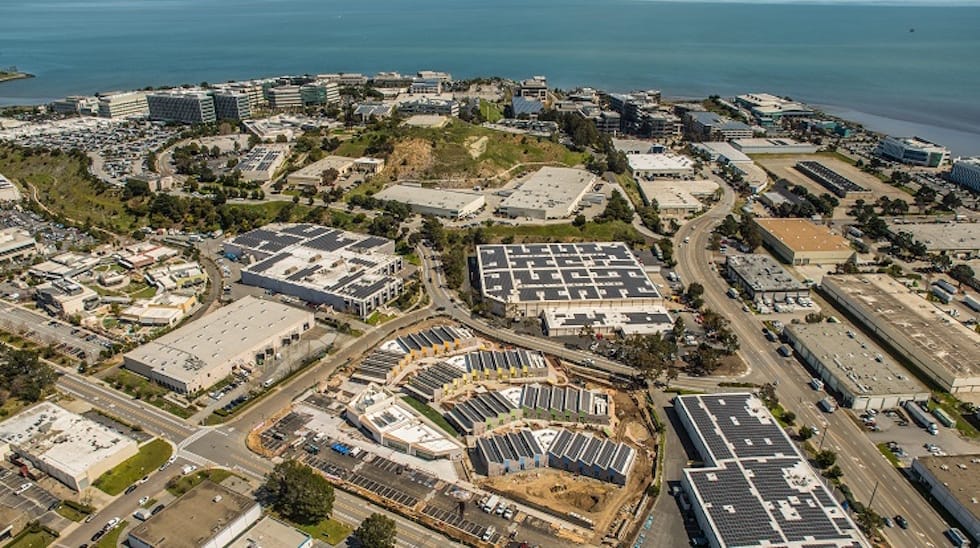
- Housing one of the largest corporate solar installations on the San Francisco Bay Area peninsula, contributing to our 2025 goal to transition 100% of our electricity to sustainable energy1
- Championing healthy building design and construction at our headquarters, with one net-zero building, one LEED Platinum building, and multiple LEED Gold, WELL and Fitwel certified buildings
- Partnering with local community colleges for chemical reuse programs
- Participating in the U.S. Department of Energy's Better Climate Challenge across all of our U.S. manufacturing sites
California SB 261 Climate-Related Financial Risk Report – Genentech is a member of the Roche Group, and its operations are encompassed in the Roche Group’s latest Sustainability Report included in the Roche Group’s Annual Report. For Genentech’s SB 261 disclosure, please see Chapter 6 of the Roche Group’s Sustainability Report “Task Force on Climate-related Financial Disclosures (TCFD)” at pages 117- 126 of the Annual Report 2024.
More on Sustainability at Genentech
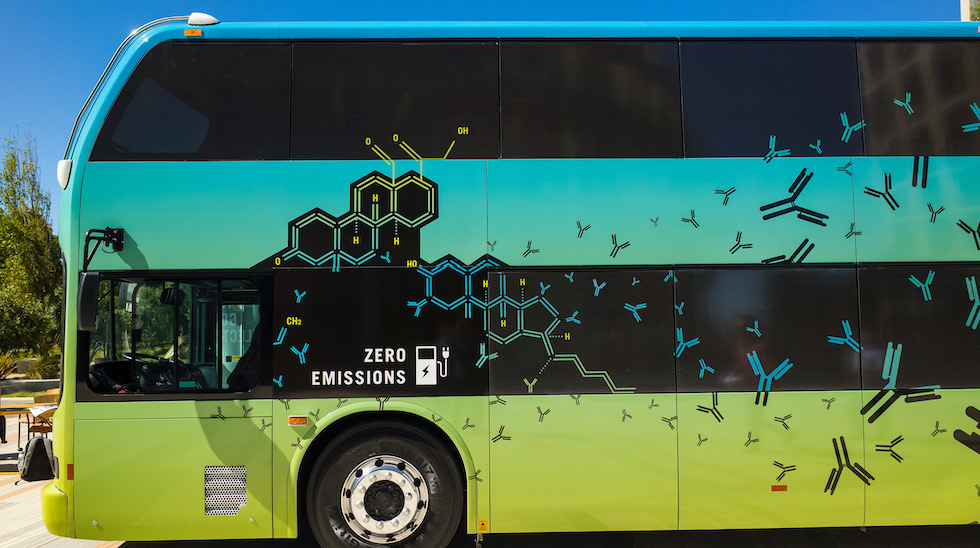
Learn about the innovation and partnerships that are powering Genentech's sustainable e-bus program for commuters.
Our parent company, Roche, is one of the most sustainable healthcare companies in the Dow Jones Sustainability Indices (DJSI).

Investing in The Future of Manufacturing
Genentech’s new Clinical Supply Center is at the forefront of next-generation manufacturing and environmental sustainability.
- 1 Roche Climate-Related Claims Disclosure Statement, Section 1.2.1. Available online at: https://assets.roche.com/f/176343/x/a86e56891d/roche-climate-related-claims-disclosure-statement.pdf.
- 2 Roche Climate-Related Claims Disclosure Statement, Section 1.2.5. Available online at: https://assets.roche.com/f/176343/x/a86e56891d/roche-climate-related-claims-disclosure-statement.pdf.