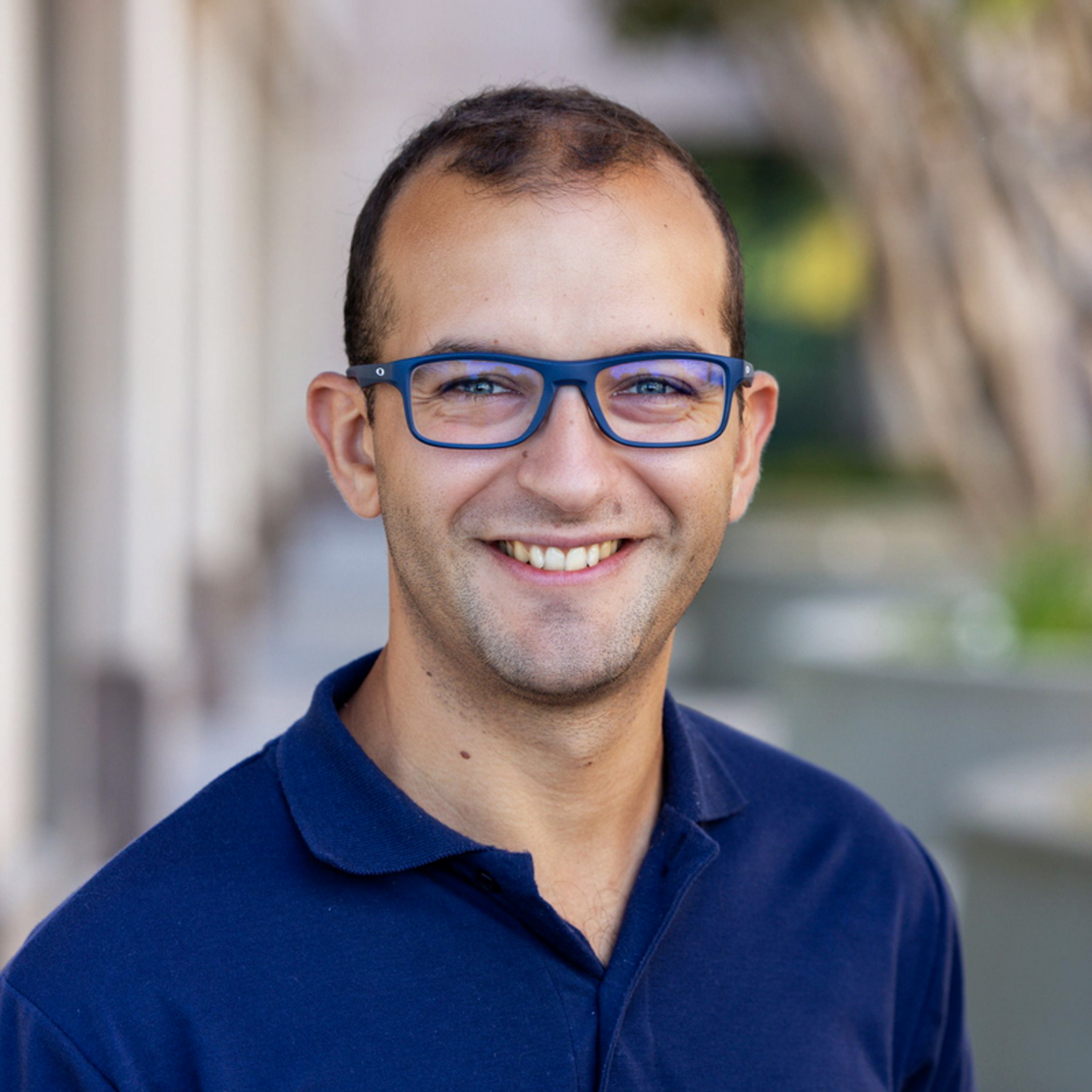
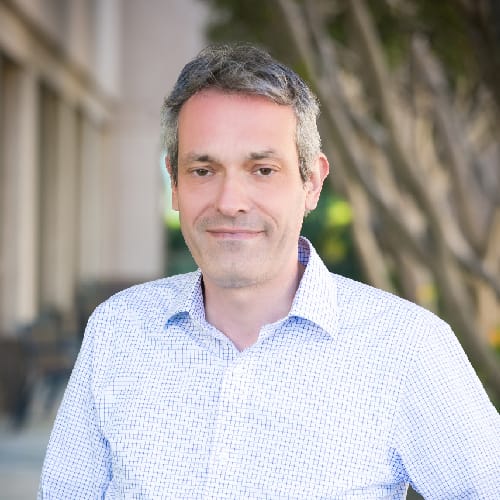
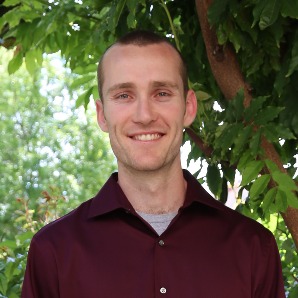
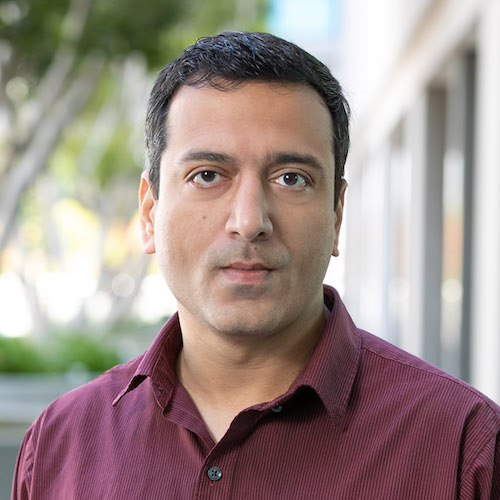
David Dornan
Senior Scientist, Molecular Diagnostics & Cancer Cell Biology-
My Keywords
Molecular Diagnostics, Cancer Cell Biology, Molecular Oncology, Oncology, Bioinformatics, Protein Chemistry -
My Department
Molecular Diagnostics & Cancer Cell Biology
I joined Genentech in 2002 as a postdoctoral research fellow in Vishva Dixit's lab in Molecular Oncology after completing my Ph.D. studies at the University of Dundee in the UK. As a product of academia I had the intellectual curiosity to explore all options, and the biotechnology industry was one that ranked highly. Given the fusion of great science and ground-breaking cancer therapeutics, Genentech was the perfect choice in my mind. Being a postdoctoral research fellow allowed me the opportunity to witness and participate in target discovery to translational medicine at its best. The very concept of a discovery that one can make in the lab that could translate into a benefit for patients is one that inspires everyone in Research at Genentech, and this is one of the essential ingredients required to create that unique environment.
Following my post-doc, I knew that Genentech was the right place to be for carrying out meaningful and impactful research. I subsequently joined the Molecular Diagnostics and Cancer Cell Biology department to dig deeper into the intriguing complexity of cancer biology and delineating the molecular features that could enable matching the right drug to the right patient.
My Focus
The Molecular Diagnostics and Cancer Cell Biology group uses bioinformatics, molecular and proteomic technologies to identify predictive biomarkers for the new cutting-edge drug candidates that enter the development pipeline. We use a combination of pre-clinical models as well as experimental systems to generate a predictive biomarker hypothesis for each molecule. We also investigate mechanisms of innate and acquired drug resistance to inform the next generation of pipeline molecules with the ultimate goal of tailoring therapies that will give long lasting patient benefit as well as uncovering exciting insights into the biology of cancer pathways.
More recently, my group has active research projects on microRNAs (miRNAs) modulating breast cancer aggressiveness by engaging a process called the epithelial-to-mesenchymal transition (EMT) that ultimately promotes breast cancer metastasis. Since the EMT process has been linked to drug resistance we believe that studying the signaling and regulatory nodes of this important biological process will provide key insights into predicting the duration of patient drug response as well as the development of the next generation of anti-cancer therapeutics.


Publications & Recognition
- TRPS1 targeting by miR-221/222 promote the epithelial-to-mesenchymal transition in breast cancer.
- Science Signaling, 4, ra41 (2011).
- Stinson S, Lackner MR, Adai AT, Yu N, Kim HJ, O'Brien C, Spoerke J, Jhunjhunwala S, Boyd Z, Januario T, Newman RJ, Yue P, Bourgon R, Modrusan Z, Stern HM, Warming S, de Sauvage FJ, Amler L, Yeh RF, Dornan D.
- View Abstract on PubMed
- CD40 pathway activation status predicts response to CD40 targeted therapy in diffuse large B cell lymphoma.
- Science Translational Medicine 3, 74ra22 (2011).
- Burington B, Yue P, Shi X, Advani R, Lau JT, Tan J, Stinson S, Stinson J, Januario T, de Vos S, Ansell S, Forero-Torres A, Fedorowicz G, Yang TT, Elkins K, Du C, Mohan S, Yu N, Modrusan Z, Seshagiri S, Yu SF, Pandita A, Koeppen H, French D, Polson AG, Offringa R, Whiting N, Ebens A, Dornan D.
- View Abstract on PubMed
- ATM engages autodegradation of the E3 ubiquitin ligase COP1 after DNA damage.
- Science 2006 Aug 25; 313(5790): 1122-6.
- Dornan D, Shimizu H, Mah A, Dudhela T, Eby M, O'rourke K, Seshagiri S, Dixit VM.
- View Abstract on PubMed
- Genentech, Inc.
- Postdoctoral Research Fellow
- 2002-2006
- University of Dundee, United Kingdom, Biochemistry & Molecular Oncology
- Ph.D.
- 1999-2002
- University of Strathclyde, United Kingdom, Biochemistry & Molecular Biology
- B.Sc. (Hons)
- 1995-1999
Publications & Recognition
- TRPS1 targeting by miR-221/222 promote the epithelial-to-mesenchymal transition in breast cancer.
- Science Signaling, 4, ra41 (2011).
- Stinson S, Lackner MR, Adai AT, Yu N, Kim HJ, O'Brien C, Spoerke J, Jhunjhunwala S, Boyd Z, Januario T, Newman RJ, Yue P, Bourgon R, Modrusan Z, Stern HM, Warming S, de Sauvage FJ, Amler L, Yeh RF, Dornan D.
- View Abstract on PubMed
- CD40 pathway activation status predicts response to CD40 targeted therapy in diffuse large B cell lymphoma.
- Science Translational Medicine 3, 74ra22 (2011).
- Burington B, Yue P, Shi X, Advani R, Lau JT, Tan J, Stinson S, Stinson J, Januario T, de Vos S, Ansell S, Forero-Torres A, Fedorowicz G, Yang TT, Elkins K, Du C, Mohan S, Yu N, Modrusan Z, Seshagiri S, Yu SF, Pandita A, Koeppen H, French D, Polson AG, Offringa R, Whiting N, Ebens A, Dornan D.
- View Abstract on PubMed
- ATM engages autodegradation of the E3 ubiquitin ligase COP1 after DNA damage.
- Science 2006 Aug 25; 313(5790): 1122-6.
- Dornan D, Shimizu H, Mah A, Dudhela T, Eby M, O'rourke K, Seshagiri S, Dixit VM.
- View Abstract on PubMed
- Dissecting cancer heterogeneity.
- Nat Biotechnol. 29, 1095 (2011).
- Dornan D, Settleman J.
- View Abstract on PubMed
- miR-221/222 targeting of trichorhinophalangeal (TRPS1) promotes epithelial-to-mesenchymal transition in breast cancer.
- Science Signaling, 4, pt5 (2011).
- Stinson S, Lackner MR, Adai AT, Yu N, Kim HJ, O'Brien C, Spoerke J, Jhunjhunwala S, Boyd Z, Januario T, Newman RJ, Yue P, Bourgon R, Modrusan Z, Stern HM, Warming S, de Sauvage FJ, Amler L, Yeh RF, Dornan D.
- View Abstract on PubMed
- Statistical techniques for identifying likely responders to a treatment under evaluation from cell line genomic data.
- BMC cancer 10, 586 (2010).
- Huang EP, Fridlyand J, Lewin-Koh N, Yue P, Shi X, Dornan D, Burington B.
- View Abstract on PubMed
- Effect of FCGR2A and FCGR3A variants on CLL outcome.
- Blood 116, 4212 (2010).
- Dornan D, Spleiss O, Yeh RF, Duchateau-Nguyen G, Dufour A, Zhi J, Robak T, Moiseev SI, Dmoszynska A, Solal-Celigny P, Warzocha K, Loscertales J, Catalano J, Afanasiev BV, Larratt L, Rossiev VA, Bence-Bruckler I, Geisler CH, Montillo M, Wenger MK, Weisser M.
- View Abstract on PubMed
- Cancer: miRNA addiction – depending on life’s little things.
- Curr Biol 20, R812 (2010).
- Dornan D, Settleman J.
- View Abstract on PubMed
- Deubiquitinase USP9X stabilizes MCL1 and promotes tumour cell survival.
- Nature 2010 Jan 7; 463(7277): 103-7.
- Schwickart M, Huang X, Lill JR, Liu J, Ferrando R, French DM, Maecker H, O'Rourke K, Bazan F, Eastham-Anderson J, Yue P, Dornan D, Huang DC, Dixit VM.
- View Abstract on PubMed
- Therapeutic potential of an anti-CD79b antibody-drug conjugate, anti-CD79b-vc-MMAE, for the treatment of non-Hodgkin lymphoma.
- Blood 2009 Sep 24; 114(13): 2721-9.
- Dornan D, Bennett F, Chen Y, Dennis M, Eaton D, Elkins K, French D, Go MA, Jack A, Junutula JR, Koeppen H, Lau J, McBride J, Rawstron A, Shi X, Yu N, Yu SF, Yue P, Zheng B, Ebens A, Polson AG.
- View Abstract on PubMed
- Antibody-based targeting of FGFR3 in bladder carcinoma and t(4;14)-positive multiple myeloma in mice.
- J Clin Invest. 119,1216 (2009).
- Qing J, Du X, Chen Y, Chan P, Li H, Wu P, Marsters S, Stawicki S, Tien J, Totpal K, Ross S, Stinson S, Dornan D, French D, Wang QR, Stephan JP, Wu Y, Wiesmann C, Ashkenazi A.
- View Abstract on PubMed
- COP1, the negative regulator of p53, is overexpressed in breast and ovarian adenocarcinomas.
- Cancer Res 2004 Oct 15; 64(20): 7226-30.
- Dornan D, Bheddah S, Newton K, Ince W, Frantz GD, Dowd P, Koeppen H, Dixit VM, French DM.
- View Abstract on PubMed
- The ubiquitin ligase COP1 is a critical negative regulator of p53.
- Nature 2004 May 6; 429(6987): 86-92.
- Dornan D, Wertz I, Shimizu H, Arnott D, Frantz GD, Dowd P, O'Rourke K, Koeppen H, Dixit VM.
- View Abstract on PubMed
- Interferon regulatory factor 1 binding to p300 stimulates DNA-dependent acetylation of p53.
- Mol Cell Biol. 24, 10083 (2004).
- Dornan D, Eckert M, Wallace M, Shimizu H, Ramsay E, Hupp TR, Ball KL.
- View Abstract on PubMed
- Human De-etiolated-1 regulates c-Jun by assembling a CUL4A ubiquitin ligase.
- Science 2004 Feb 27; 303(5662): 1371-4.
- Wertz IE, O'Rourke KM, Zhang Z, Dornan D, Arnott D, Deshaies RJ, Dixit VM.
- View Abstract on PubMed
- The proline repeat domain of p53 binds directly to the transcriptional coactivator p300 and allosterically controls DNA-dependent acetylation of p53.
- Mol Cell Biol. 23, 8846 (2003).
- Dornan D, Shimizu H, Burch L, Smith AJ, Hupp TR.
- View Abstract on PubMed
- DNA-dependent acetylation of p53 by the transcription coactivator p300.
- J Biol Chem. 278, 13431 (2003).
- Dornan D, Shimizu H, Perkins ND, Hupp TR.
- View Abstract on PubMed
- Regulation of the IRF-1 tumour modifier during the response to genotoxic stress involves an ATM-dependent signalling pathway.
- Oncogene 21, 7776 (2002).
- Pamment J, Ramsay E, Kelleher M, Dornan D, Ball KL.
- View Abstract on PubMed
- The conformationally flexible S9-S10 linker region in the core domain of p53 contains a novel MDM2 binding site whose mutation increases ubiquitination of p53 in vivo.
- J Biol Chem. 277, 28446 (2002).
- Shimizu H, Burch LR, Smith AJ, Dornan D, Wallace M, Ball KL, Hupp TR.
- View Abstract on PubMed
- Inhibition of p53-dependent transcription by BOX-I phospho-peptide mimetics that bind to p300.
- EMBO Rep. 2, 139 (2001).
- Dornan D, Hupp TR.
- View Abstract on PubMed
Awards & Honors
-
Scottish International Educational Trust Award--2001
-
BBSRC Ph.D. Fellowship--1999
-
PJ Heald Memorial Prize--1999
-
Nuffield Foundation Research Award--1998