|
Founded more than 30 years ago, Genentech is a leading biotechnology company that discovers, develops, manufactures and commercializes medicines to treat patients with significant unmet medical needs. The company has headquarters in South San Francisco, California, and is listed on the New York Stock Exchange under the symbol DNA. The below information is current as of April 2008. Founders and Date of Incorporation Venture capitalist Robert Swanson and biochemist Dr. Herbert Boyer founded Genentech on April 7, 1976. Financial Highlights
Genentech's unrestricted cash and investments portfolio totaled approximately $7.1 billion as of March 31, 2008. Employees
The company has consistently been recognized as a top employer by such publications as FORTUNE, Working Mother, and Science. In January 2008, FORTUNE named Genentech to its list of the "100 Best Companies to Work For" in the United States for the tenth consecutive year. Executive Committee The Genentech Executive Committee provides guidance on overall strategy, business development, sales and marketing, and research and development. Its members include:
Research Genentech conducts basic and applied research in the areas of oncology, immunology, and disorders of tissue growth and repair, with a major focus on angiogenic disorders. In March 2008, the research organization also announced the initiation of early efforts in two new therapeutic areas: neuroscience and infectious disease. Genentech's more than 900 scientists consistently publish important papers in prestigious journals and are among the top researchers in the world in terms of total citations. Pipeline Genentech's development pipeline numbers more than 100 projects and includes a combination of breakthrough innovations and new indications for existing, well-understood products that may fight more than one disease or more than one form of a disease. Products Since the company was founded in 1976, Genentech has focused its drug discovery efforts on therapies that address significant unmet medical needs. Today Genentech manufactures and commercializes multiple biotherapeutics for serious or life-threatening medical conditions. Genentech's marketed products include: BioOncology
Immunology
Tissue Growth and Repair
Commitment to Patient Access Genentech is committed to patients having access to our therapies. Through its Genentech Access Solutions program, the company provides patients and healthcare providers with coverage and reimbursement support, patient assistance and informational resources. Patient assistance support is for those eligible patients in the United States who do not have insurance coverage or who cannot afford their out-of-pocket co-pay costs. Since 1985, when its first product was approved, Genentech has donated approximately $1 billion in free medicine to uninsured patients through the Genentech® Access to Care Foundation (GATCF) and other product donation programs. Since 2005, Genentech has also donated more than $140 million to various independent non-profit organizations that provide financial assistance to eligible patients who cannot access needed medical treatment due to co-pay costs. Corporate Growth Strategy Our Horizon 2010 vision and goals will help ensure that we are solidly positioned to continue our 32-year mission of discovering, developing, manufacturing and commercializing life-enhancing and life-saving medicines for patients with unmet medical needs. Originally announced in March 2004, the company provided an update to its Horizon 2010 goals in March 2006.


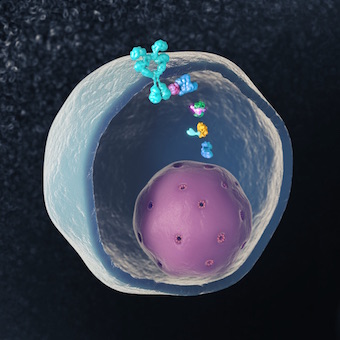
Our Vision Our Goals
Our Corporate Growth Strategy contains forward-looking statements regarding adding 20 molecules into clinical development by 2010, bringing 15 major new products/indications onto the market by 2010, becoming the number one U.S. oncology company in sales by 2010, and Genentech's long-term growth, including growth in non-GAAP earnings per share (EPS) and cumulative free cash flow by 2010. Such statements are predictions and involve risks and uncertainties such that actual results may differ materially. Among other things, adding molecules into clinical development could be affected by a number of factors, including unexpected safety, efficacy or manufacturing issues, additional time requirements for data analysis, BLA preparation and decision making, need for additional clinical studies, and FDA actions or delays; bringing new products/indications to market could be affected by all of the foregoing and by a number of other factors, including failure to obtain or maintain FDA approval; becoming a leader in oncology sales could be affected by all of the foregoing and by a number of other factors, including competition, pricing, reimbursement, intellectual property or contract rights, the ability to supply product, product withdrawals and new product approvals and launches, and Genentech's growth, including growth in non-GAAP EPS and cumulative free cash flow, could be affected by all of the foregoing and by a number of other factors, including achieving sales revenue consistent with internal forecasts, costs of sales, R&D and MG&A expenses, stock-based compensation expense, unanticipated expenses such as litigation or legal settlement expenses or equity securities writedowns, royalties and contract revenues, and fluctuations in tax and interest rates. Please also refer to Genentech's periodic reports filed with the Securities and Exchange Commission. Genentech disclaims, and does not undertake any obligation to, update or revise any forward-looking statements in this Corporate Growth Strategy.
1 The non-GAAP EPS goal for 2006 through 2010 excludes the after-tax effects of the following items: employee stock-based compensation expense associated with our adoption of FAS 123R, recurring charges related to the redemption of our special common stock by Roche, litigation-related special charges for accrued interest and associated bond costs on the City of Hope judgment, certain items associated with the acquisition of Tanox, Inc. in the third quarter of 2007, including recurring recognition of deferred royalty revenue, recurring amortization of intangible assets, in-process research and development expenses (a non-recurring expense in the third quarter of 2007), and a gain pursuant to Emerging Issues Task Force (EITF) Issue No. 04-1 (a non-recurring gain in the third quarter of 2007), and other potential special charges related to existing or future litigation or its resolution, and changes in accounting principles, all of which may be significant. GAAP EPS for 2006 through 2010 would include the items described above. |
||||||||||||||||||||||||||||||||||||||||||||||||||